Art Thief
MUSINGS
ON
A SOLO SHOW
JUNE 2026
O'HANLON CENTER FOR THE ARTS
I am not one of those artists who says, “I have always been an artist. I was always drawing and painting as a child.” My favorite activity as a child was playing school, where my sister and I would exchange roles as teacher or student. If I was anything, I was studious.
And that is why, I’m sure, I felt some need to write this little essay to accompany my show “Art Thief” at the O’Hanlon Center for the Arts in June 2026. Rational understanding, clear verbal communication, historical connections—these are as important to me as making art.
My academic career has been entirely in the study of philosophy. I have a BA, MA, and PhD in philosophy and taught philosophy in Massachusetts for almost two decades. I will be 81 when my show opens, and I decided it might be time to bring my philosophy to my art, or at least to this stage of my art.
Most people think of philosophy in the manner of being comparatively thoughtful, like “having a philosophy of life.” But this is pretty far from what the academic pursuit of philosophy is. The academic study of philosophy is rigorous argument and justification of belief. It is love of truth and love of big, important questions—love of human’s rational capacity and drive to think about those questions deeply.
I bring this up not to prepare you for some philosophical exegesis. I do, though, want to pursue a thoughtful approach to my art, noting some threads and through lines, some historical connections, and some observations about what it is I am seeking in my art.
In the 1990s I learned to paint floorcloths, canvas rugs, which ever since have adorned my home. Floorcloths are a craft: useful, full of process, measurement, and design. I like the process, but what I especially like is the fact that no one in the world has rugs like my rugs. They are unique to me, and this idea of working to produce some real, visual thing in the world that expresses your own creative intent took hold.
In 2012, I took a workshop in monoprinting given by Cayen Robertson at the Mendocino Art Center. I instantly fell in love with all things ink: the smell, the texture, the brayer, the infinite possibilities. I was pretty good at it, too, getting my first piece into a prestigious show at O’Hanlon—“Bay Area Women Artists”—just a few months after taking that first workshop. I took workshops with Cayen at O’Hanlon for five or six more years.
Print making has a long, storied, rich place in the history of art. But here is the simple truth: all printing is the transfer of ink from one surface (the plate) onto another (the art surface). The ink may be spread on a wood block, a piece of linoleum, a piece of plastic, or an etched metal plate. It may be transferred onto paper, or wood, or silk, or canvas. The essence is the same: printing is the transfer of ink from one surface onto another.
In particular, photo transfers are the transfer of ink from printed material such as photographs, magazines, scans, or computer printouts onto an art surface. Robert Rauschenberg is usually associated with making significant advances in print innovation in modern times. He was innovative in his use of photo transfers, trying various solvents to transfer the ink from, for instance, magazine pages and pictures onto various surfaces. In a recent article in the New York Times celebrating what would have been his 100th birthday, the author writes, Rauschenberg “remains a celebrated figure in the 21st century because he gave license to succeeding generations of young artists to think about art in a new way, not as an expression of draftsmanly skill or inner torment, but rather as a playful process.”
I think my favorite contemporary artist who combines photo transfers with painting and drawing is the Nigerian American artist Njideka Akunyili Crosby. Her complicated works transfer images of Nigerian life and family onto huge, multi-layered, and stunning art works. See https://www.njidekaakunyilicrosby.com/selected-works.
I started introducing ink transfers and photo transfers into my prints really quite soon after beginning monoprinting, and they have remained a frequent element of my art work.
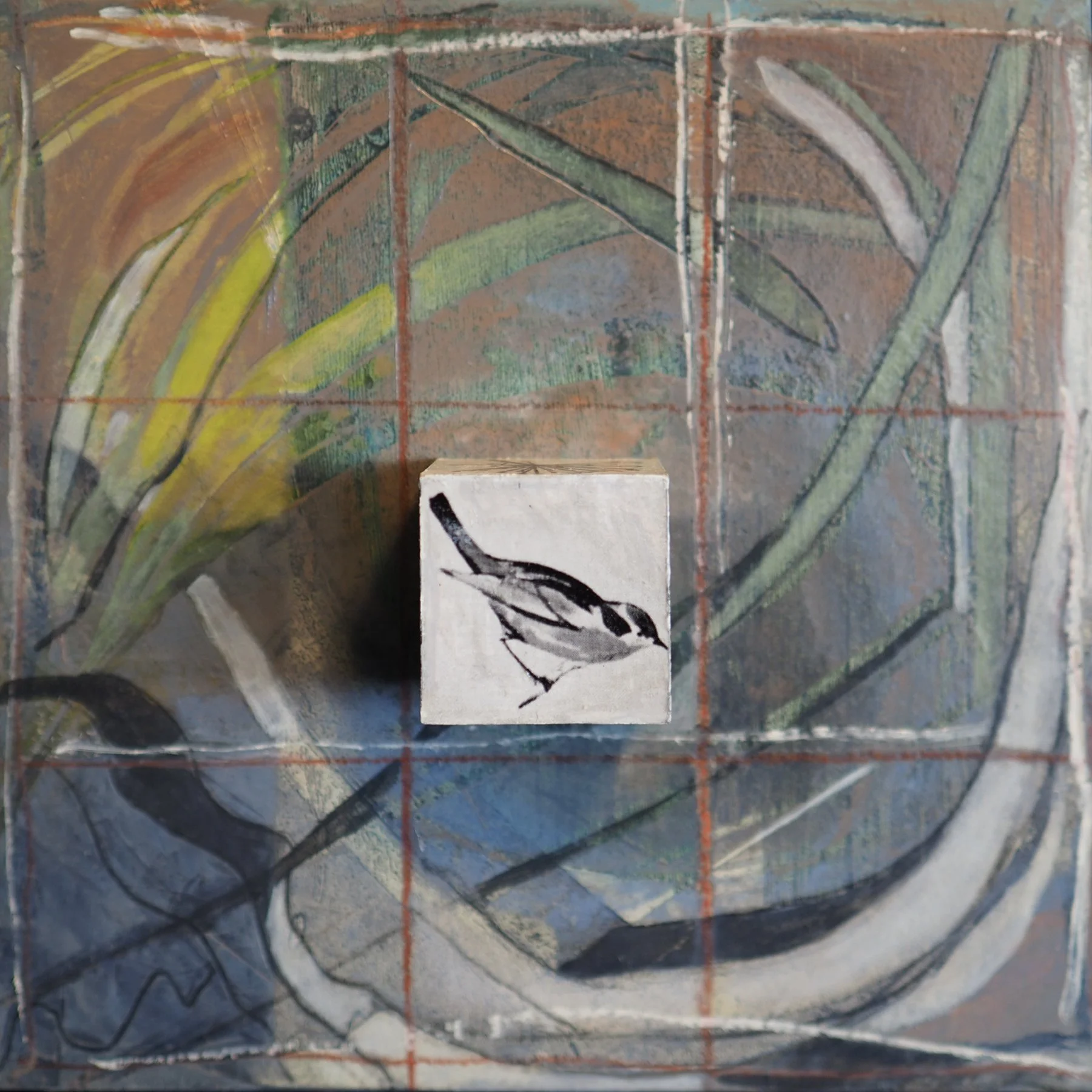
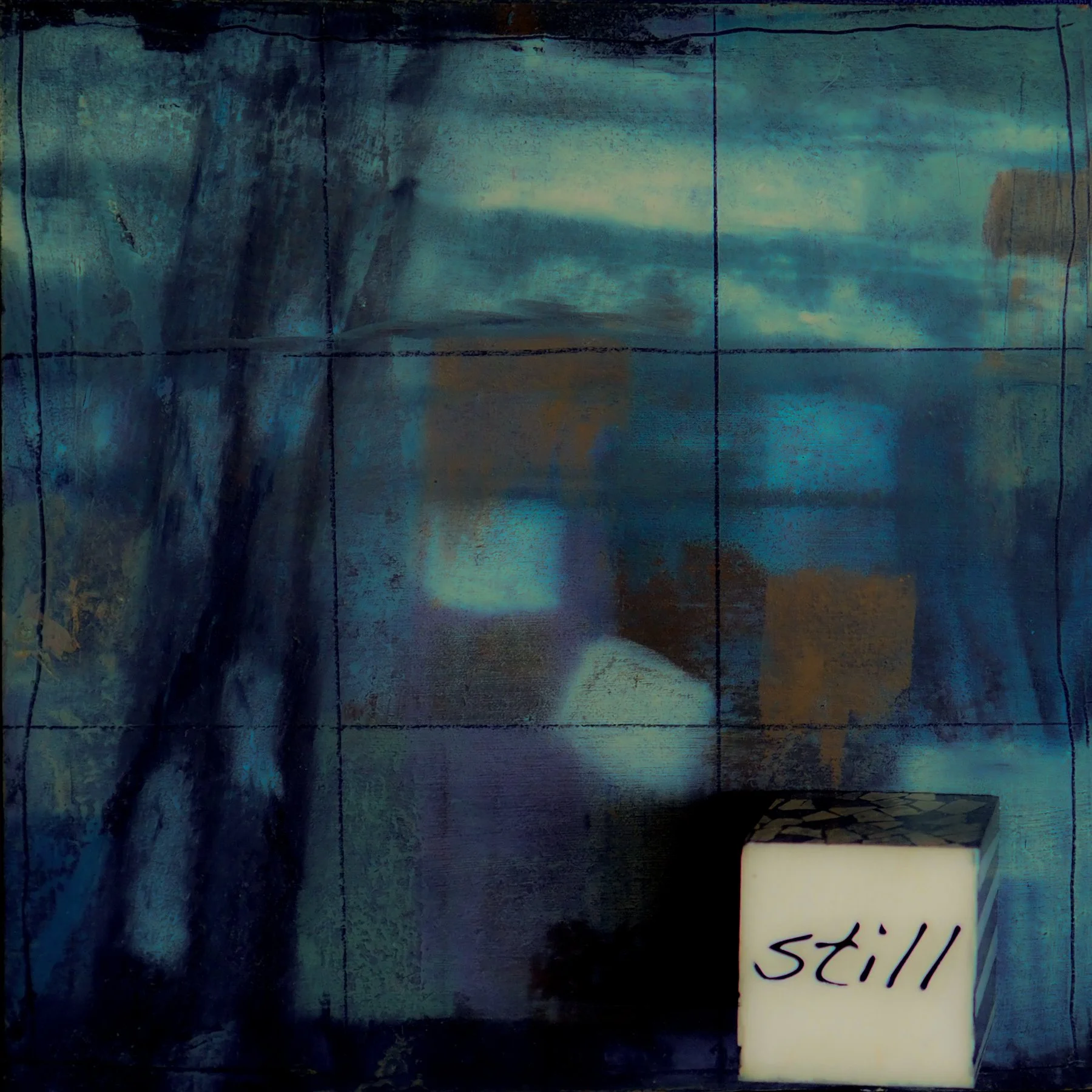
Photo transfers are the throughline of the art in this show. My photo transfers are made using a scanner, a computer, and a laser printer. Artists have always used the tools of their time to capture or transform their perceptions, their memories, their feelings. And, so, I use the computer and laser printer. I am an art thief. I make scans of photographs or drawings or other artists’ images, transform them in Photoshop to create illusions or references that are essential or revealing to me, print them out on an ordinary laser printer, then, in a fairly complicated process, transfer them onto a surface to become a part (sometimes trivial, sometimes major) of my art work.
In this context, the computer is a tool that improves my sight, improves my imagination, and allows me to reassemble and recontextualize accidents of my experience. It makes me very happy that, having moved on from monoprinting to painting, I can still keep printing in my painting. Still keep ink in my toolbox, still keep one love while pursuing another.
Having laid some groundwork, let me think out loud about how I understand my art. I don’t believe it’s necessary or important in general for artists to understand their art; lots of artists hate talking about their art or their process; they just want to do it. But given my background in philosophy, I can’t help it: I want to understand what I am doing and why.
LIKE TOM STOPPARD
Tom Stoppard, the brilliant playwright, died recently. My husband and I are great fans. After his death, it hit me quite suddenly and powerfully that in my art making, I am like Tom Stoppard. Please don’t get me wrong. I absolutely don’t mean by that that I am great at what I do; I don’t pretend to be prolific or a genius or even particularly accomplished.
But here is what I do mean: there are three characteristics of Tom Stoppard’s plays that I think are similar to things I see in my own art.
1. STOPPARD PLAYS ARE ABOUT IDEAS
Stoppard’s plays rely heavily on truly profound offstage others: Shakespeare, Newton, Byron, Wilde, Marx, Kant, Plato. Stoppard loves ideas and constantly alludes to and references giants in our cultural lexicon.
His characters discuss important topics like ethics, love, time, romance, science, certainty and doubt—they discuss the ideas of others and reflect on how those ideas might effect their own lives.
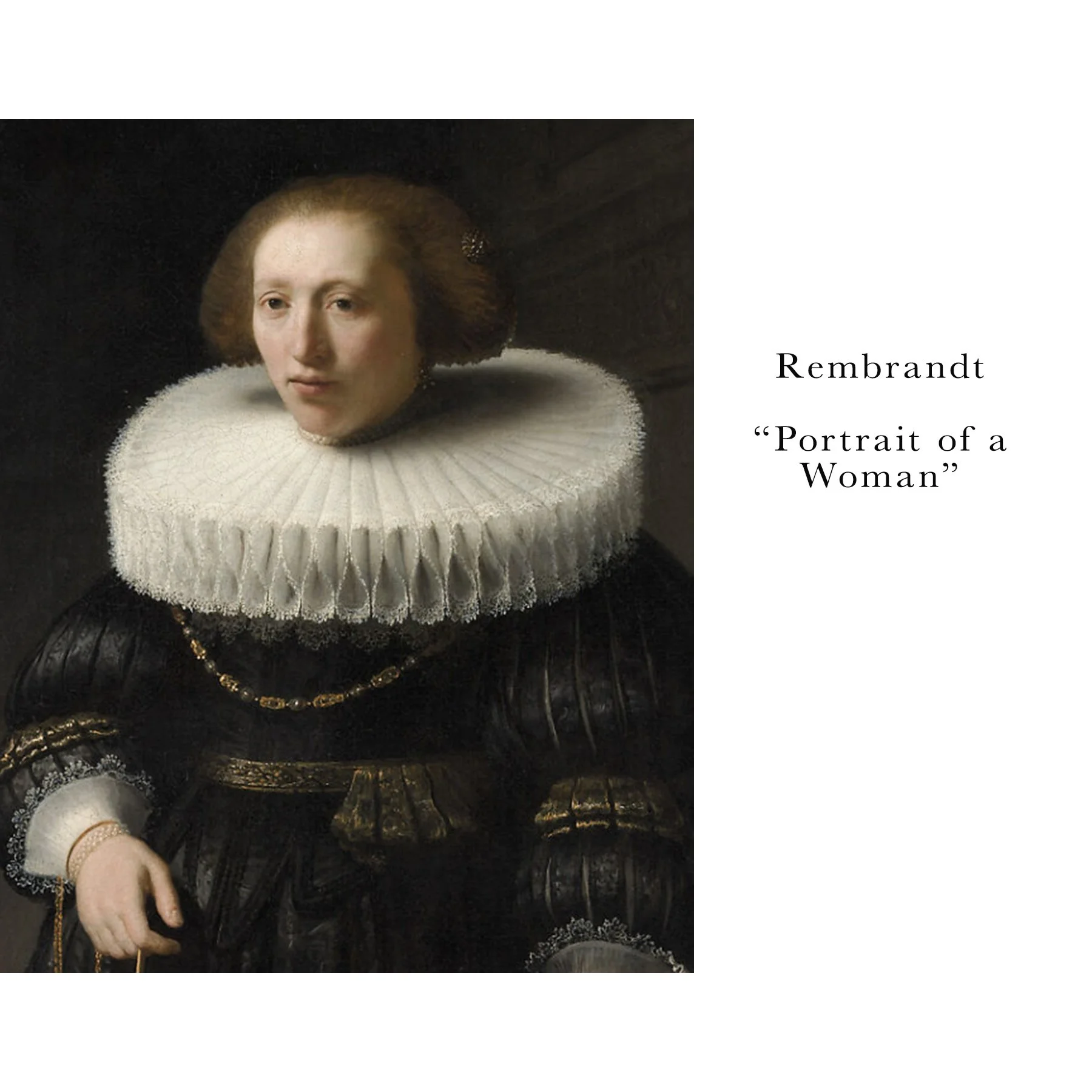
I like to think my paintings are primarily about ideas. They often allude to and reference truly profound artists: Morandi, Irwin, Rembrandt, Diebenkorn, Van Gogh, Thiebaud, Degas. Artists who dealt with huge problems in art like the nature of light, the subjectivity of experience, the architecture of space, the role of intention, the flatness of two-dimensional space. These are huge questions dealt with imaginatively and conscientiously by great artists. I admire their efforts; I try hard to understand them.
Very often discussions about art circle around discussions of perception, memory, and feeling. Perceptions get replicated or interpreted; memories soften and loosen perceptions; personal feelings get expressed. For me, though all of these are important, I think it is my background in philosophy that leads me to ideas as the primary source of my art. Ideas that come from beautiful poems, ideas that come from feminist rage, ideas that come from mythology, ideas that come from art that takes my breath away.
My art is sort of representational but it does not usually literally refer to anything. It almost never refers directly or importantly to myself. It’s not pure invention like abstract art, nor only concerned with what Lucian Freud called “aesthetic emotion.” Rather, the Italian artist Giuseppe Penone said, “The role of art is as a container for thought,” and that strikes me as similar to my aims.
I want my art to be imaginative, thoughtful, and engaging. I think this is what moved me from abstract art to more figurative art. Robert Irwin, the great light/space artist, said “Figurative thinking and the processes of logical thought are really parallel.” Logical thought is very much what philosophy is, so, in some sense my art becoming more personal is my art becoming more figurative.
2. STOPPARD PLAYS ARE CLEVER
Stoppard’s plays are always clever. They are playful, they have an elegant wit, a charm and delight.
It always pleases me when someone walks into my studio or sees a painting in a show and there is a nice smile on their face. A smile of recognition, a smile of curiosity, an indication that they got my small joke, my meaning. Robert Motherwell said a painting is “a visual trace of the human spirit.” And inventing an image that wakes you up a little or gets you to go read something or pay attention to what you just felt is a simple pleasure.
3. STOPPARD STEALS FREELY
Stoppard’s plays not only reference profound thinkers, they steal whole swaths of their brilliance.
I steal freely in my art. I steal my husband’s photos, I steal bits and pieces off the internet, I steal motifs and actual images from other artists. I used to be a little self-conscious about this, but I have learned not to be. Photo transfers are participants in the appropriative tradition of art, and they are no more suspect as original art than collage or cross-cultural appropriation. It is my way of finding raw material I can rework, rethink, reassemble, remake to suit my own creative purposes.
So, saying I am Like Tom Stoppard is a compact way for me to understand my art and to allow myself to observe myself as an artist, at least at this moment of my art practice. The book “What Do I Know of Joy,” by Cayen Robertson and Linda Martinez Robertson, opens with a quote from the poet Edward Hirsch, “Works of art initiate and provoke other works of art: the process is a source of art itself.” In a similar vein, Wayne Thiebaud writes, “I believe very much in the tradition that art comes from art and nothing else.” The Legion of Honor of the Fine Arts Museums of San Francsico recently had a Thiebaud retrospective entitled “Art Comes From Art.” That show liberated me. Thiebaud owned being an art thief, reinterpreting works by old masters and sometimes quite literally copying works he admired with few changes.
It is a way of connecting to past artists and to other people generally. It is a way to learn but also to appreciate. To be inspired but also to invent. To respect but also to revise.
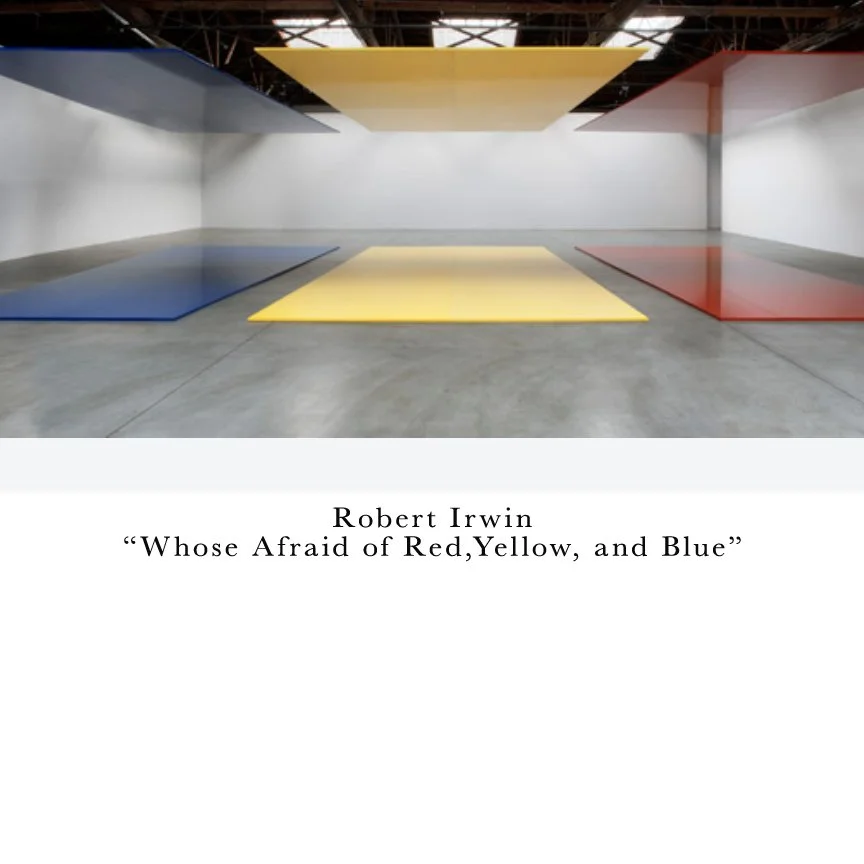
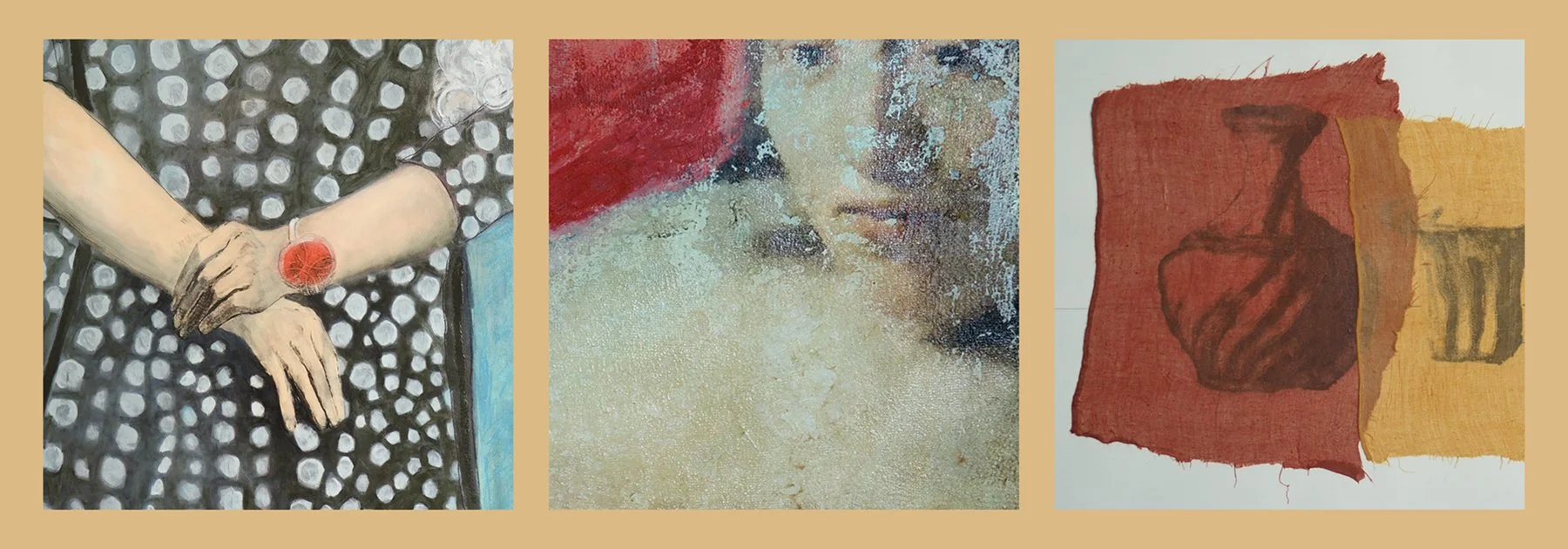
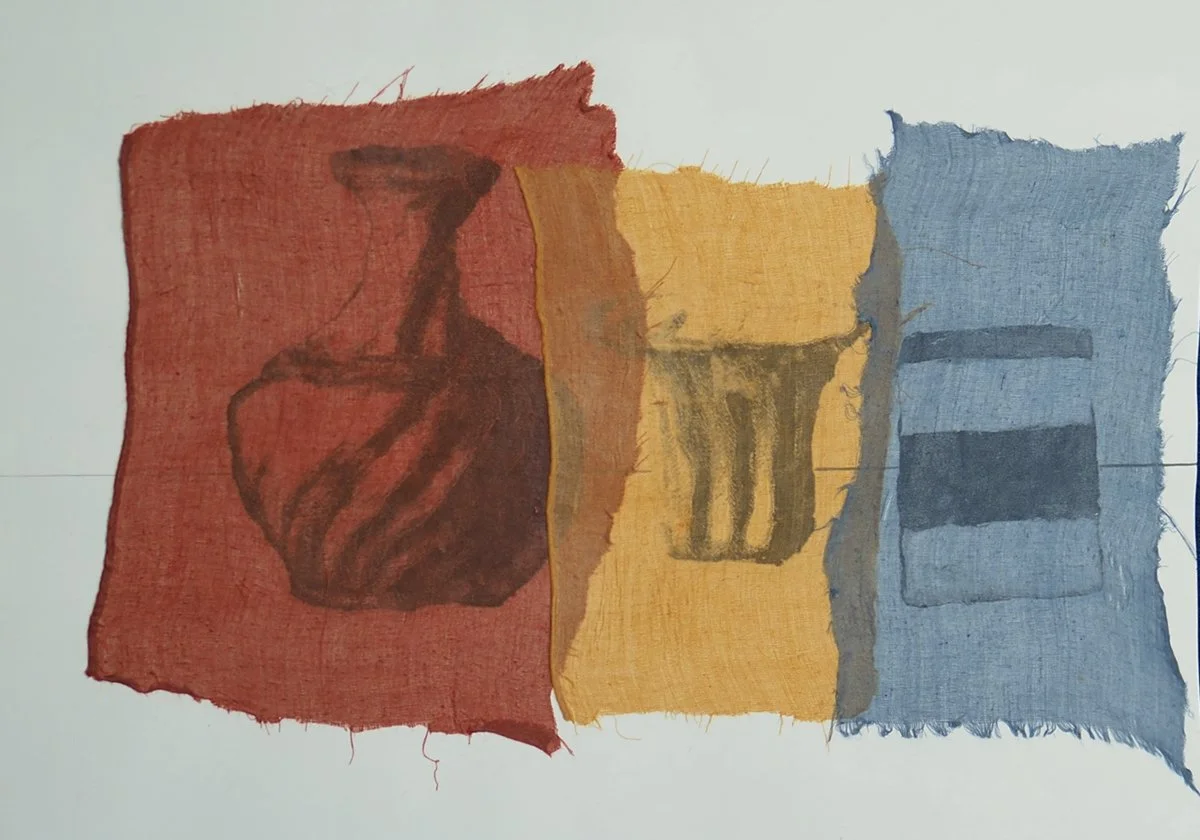
Let me offer an in-depth example that shows all of these three points: see my piece below, “Who’s Afraid of Red, Yellow, or Blue?”
The title itself is a hint that I am referencing ideas here because, while my immediate reference is to Robert Irwin’s installation of the same name, Irwin himself was referencing a series with this name by Barnett Newman. So, I am already in conversation with some artists I admire very much. The photo transfers in this piece are the vessels, and I have stolen them from Giorgio Morandi, who, for most of his artistic life, painted exquisite variations on this theme, arranging and rearranging bottles and vases he kept in a closet near his studio space. Now Morandi, for me, is a perfect painter, and his small still lifes (Natura Morta) are, at least in part, about calmness, profound calmness. Irwin’s light/space art is similarly, to me, about profound calmness. So, my imagination has connected my visual experiences of these two artists; I can’t speak to how that happens, it just does. Now, Irwin’s installation is huge: large colored aluminum panels of red, yellow, and blue on the floor and ceiling. I have neither the skills nor the room to replicate them. But I have fabric. So I create “panels” of red, yellow, and blue cloth. Ultimately, I hope this piece would lead viewers to smile if they recognize Morandi and Irwin, or go and learn something about Morandi and Irwin if they are not already familiar. I hope also that the piece communicates something of the idea of calmness that I find so deeply attractive in their art.
……………………………………
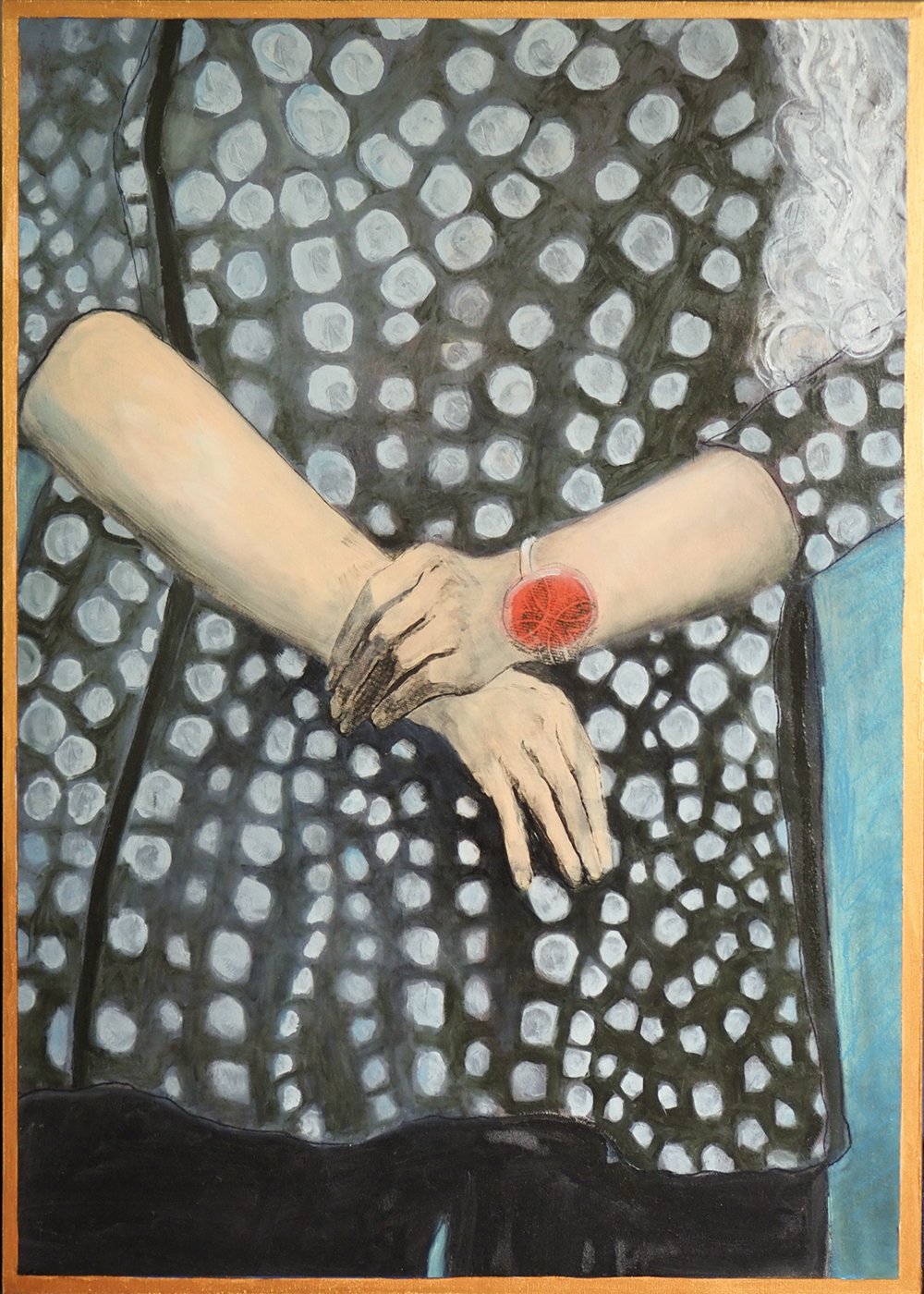
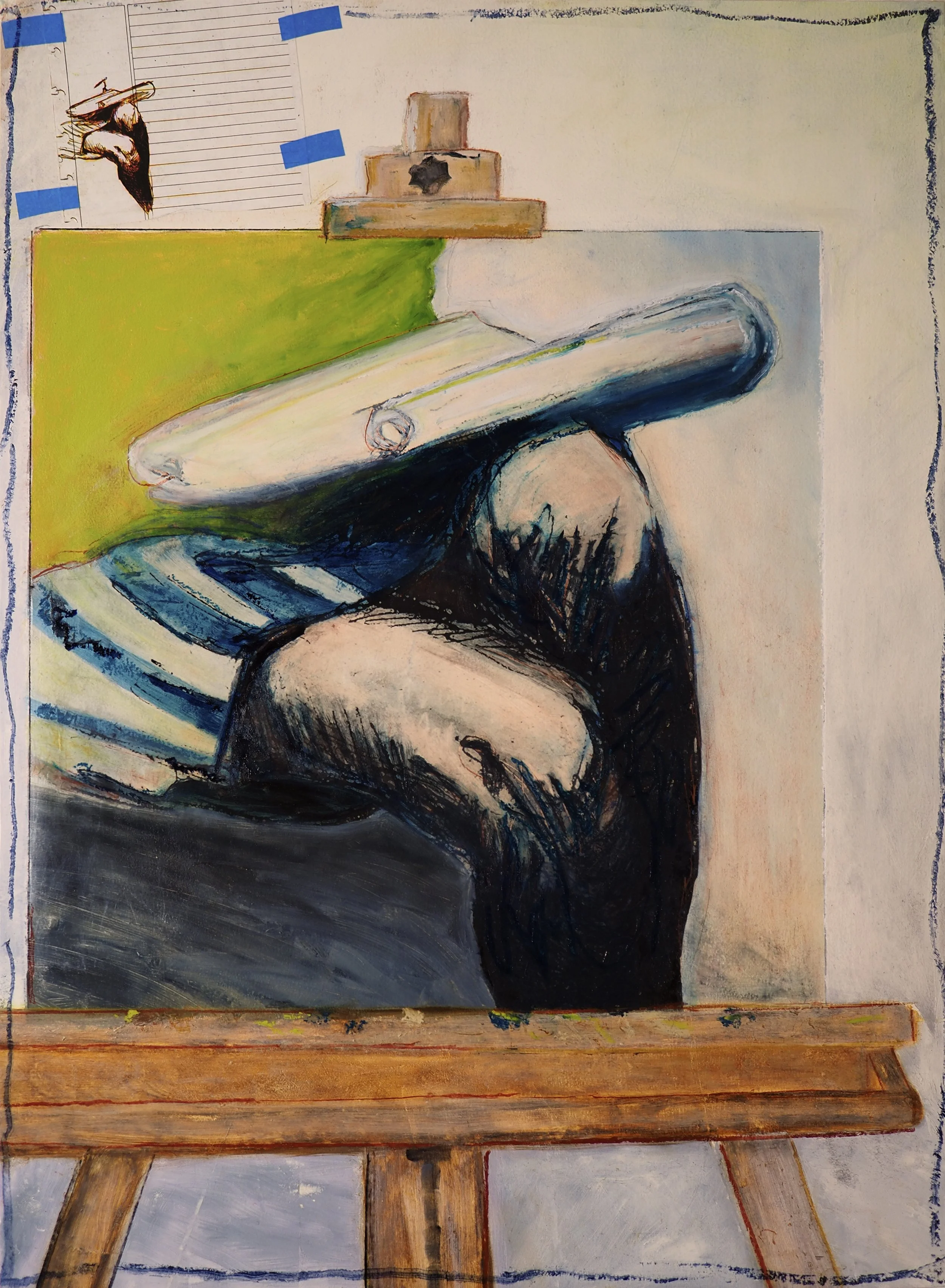
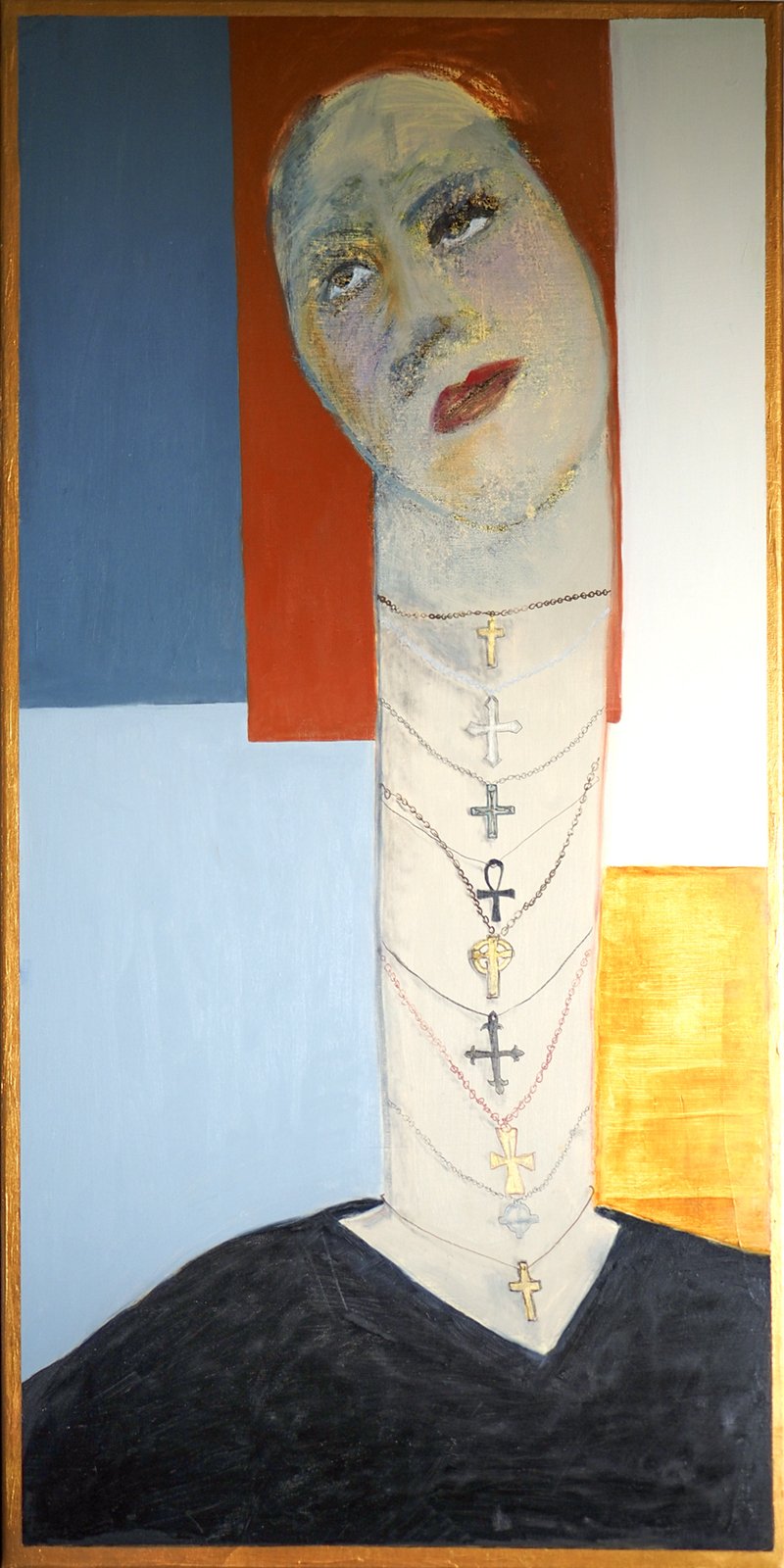
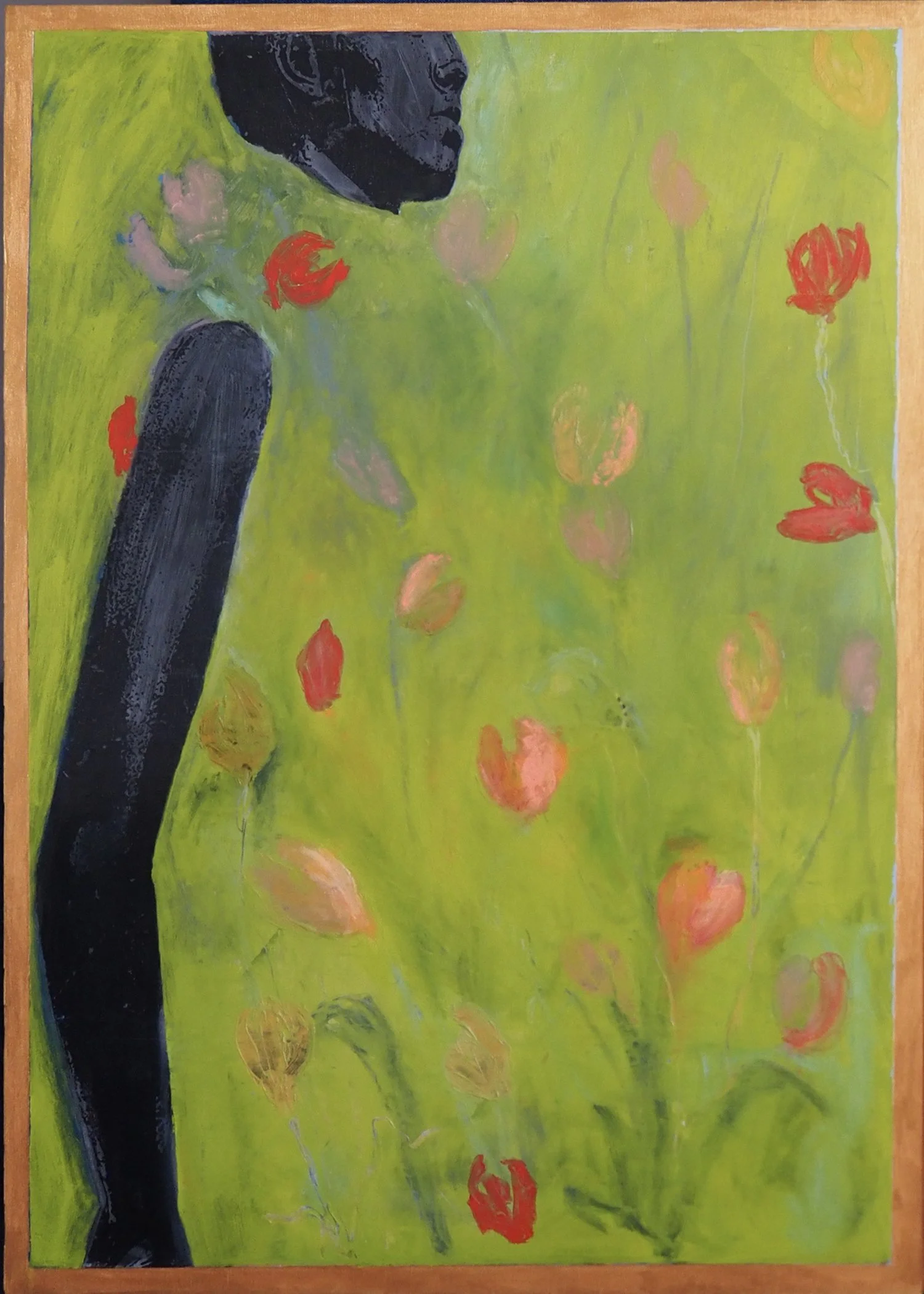
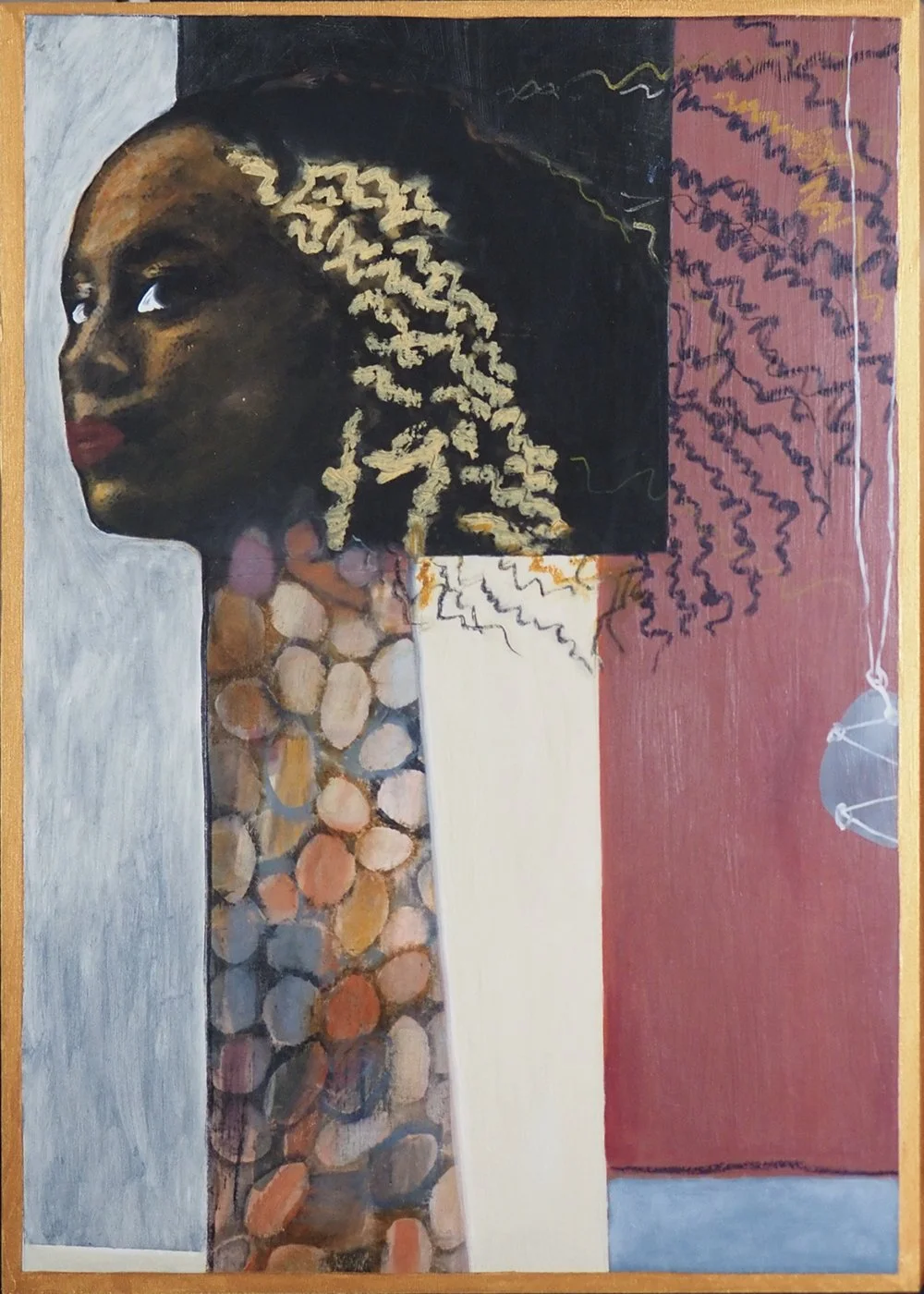
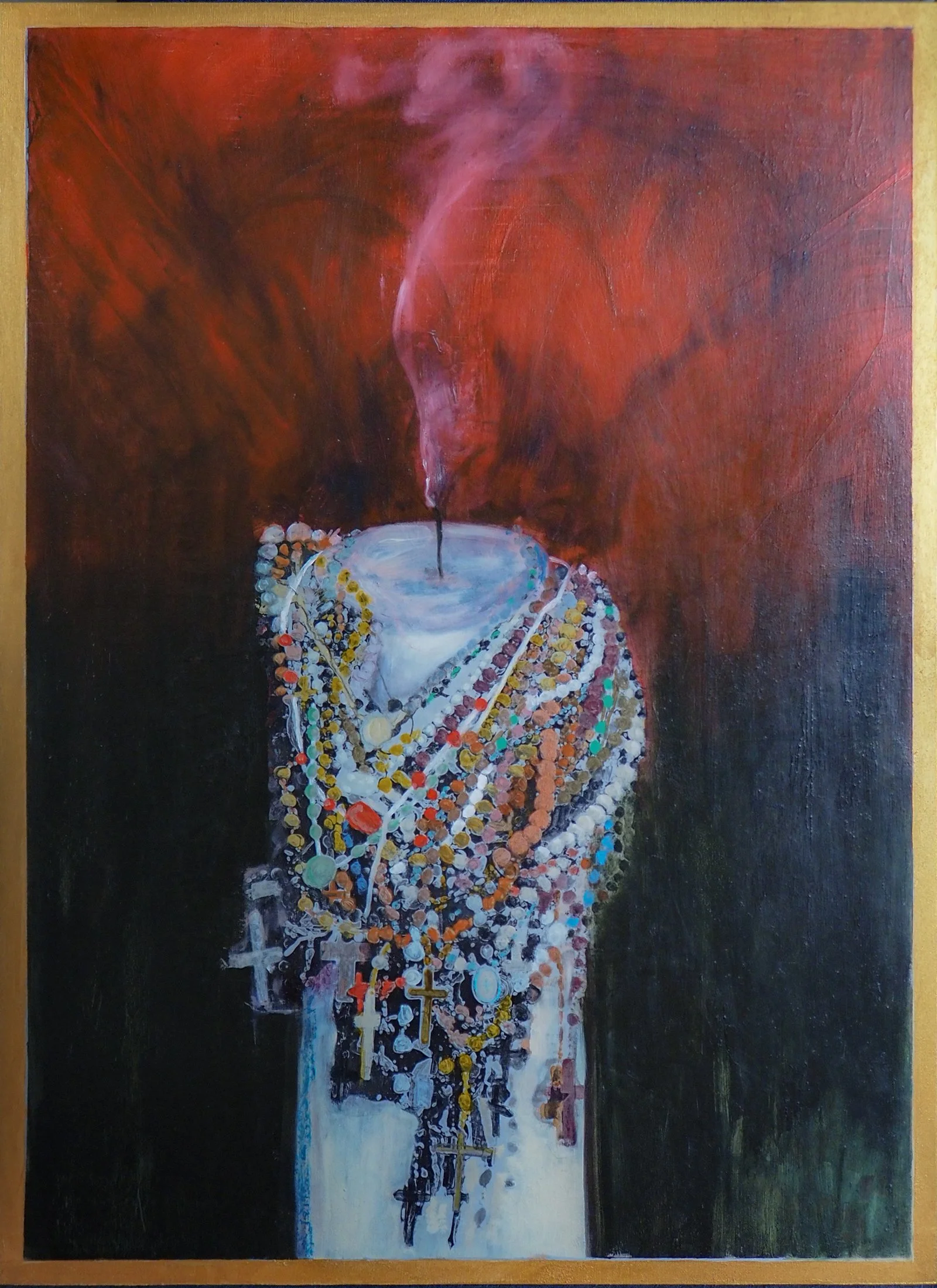
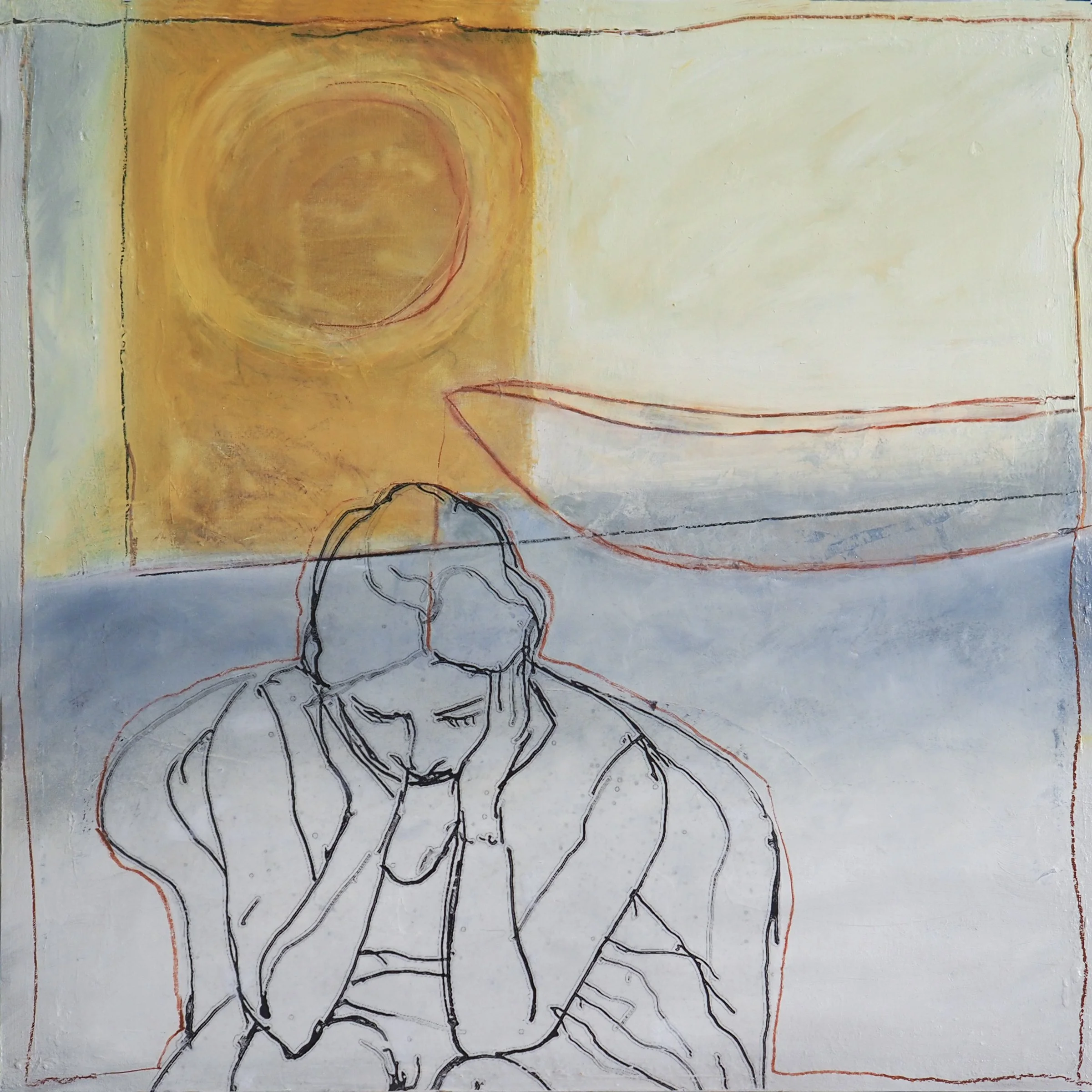
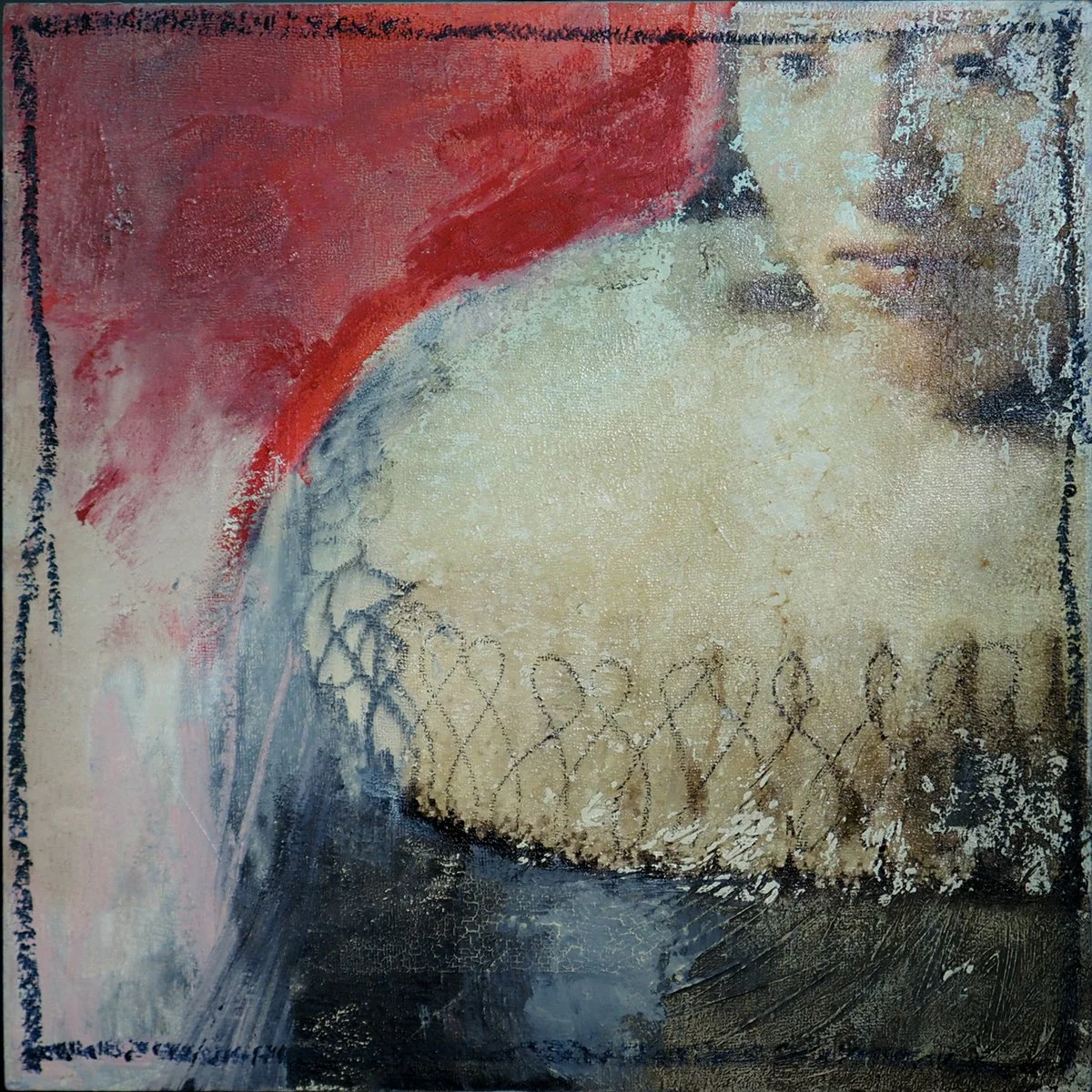
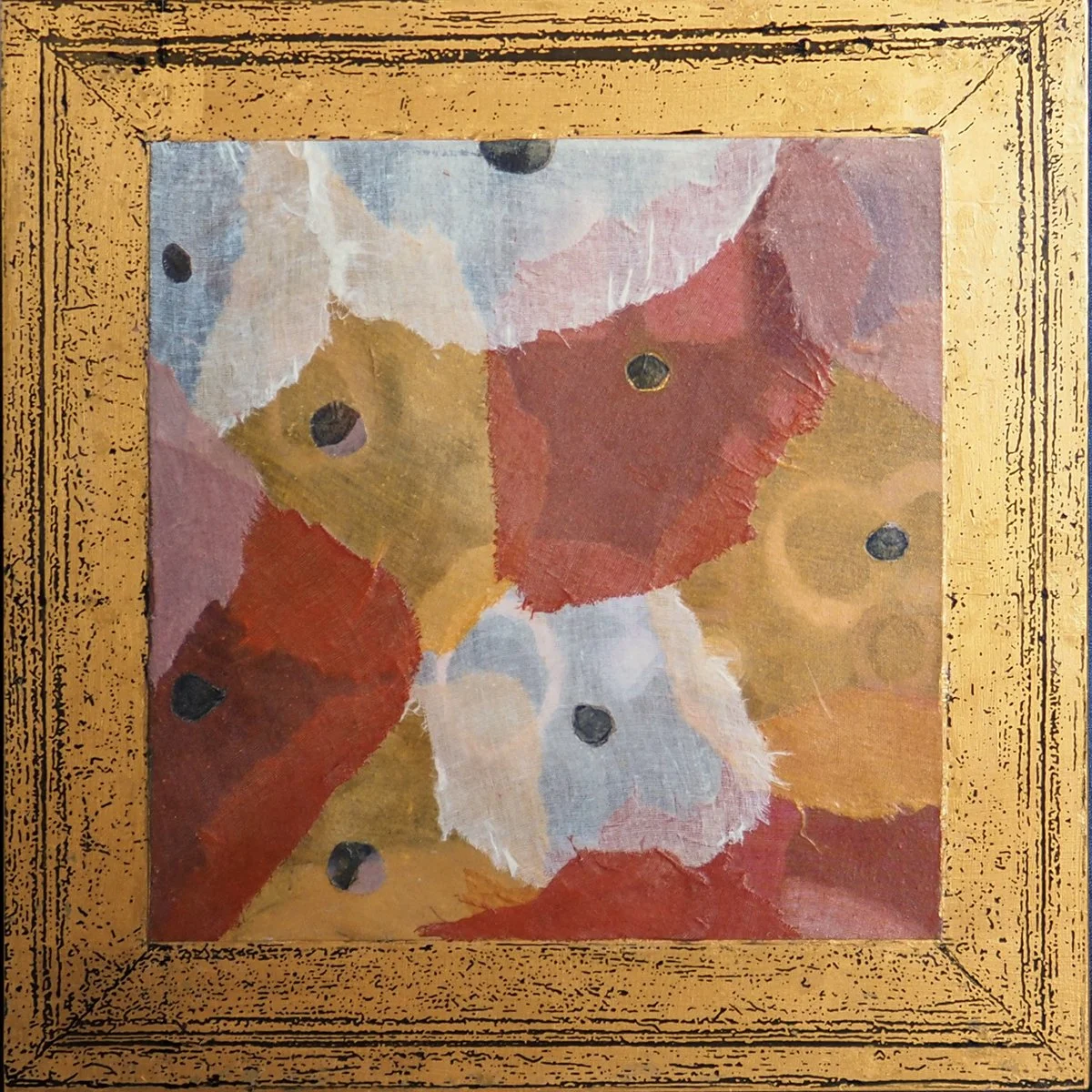
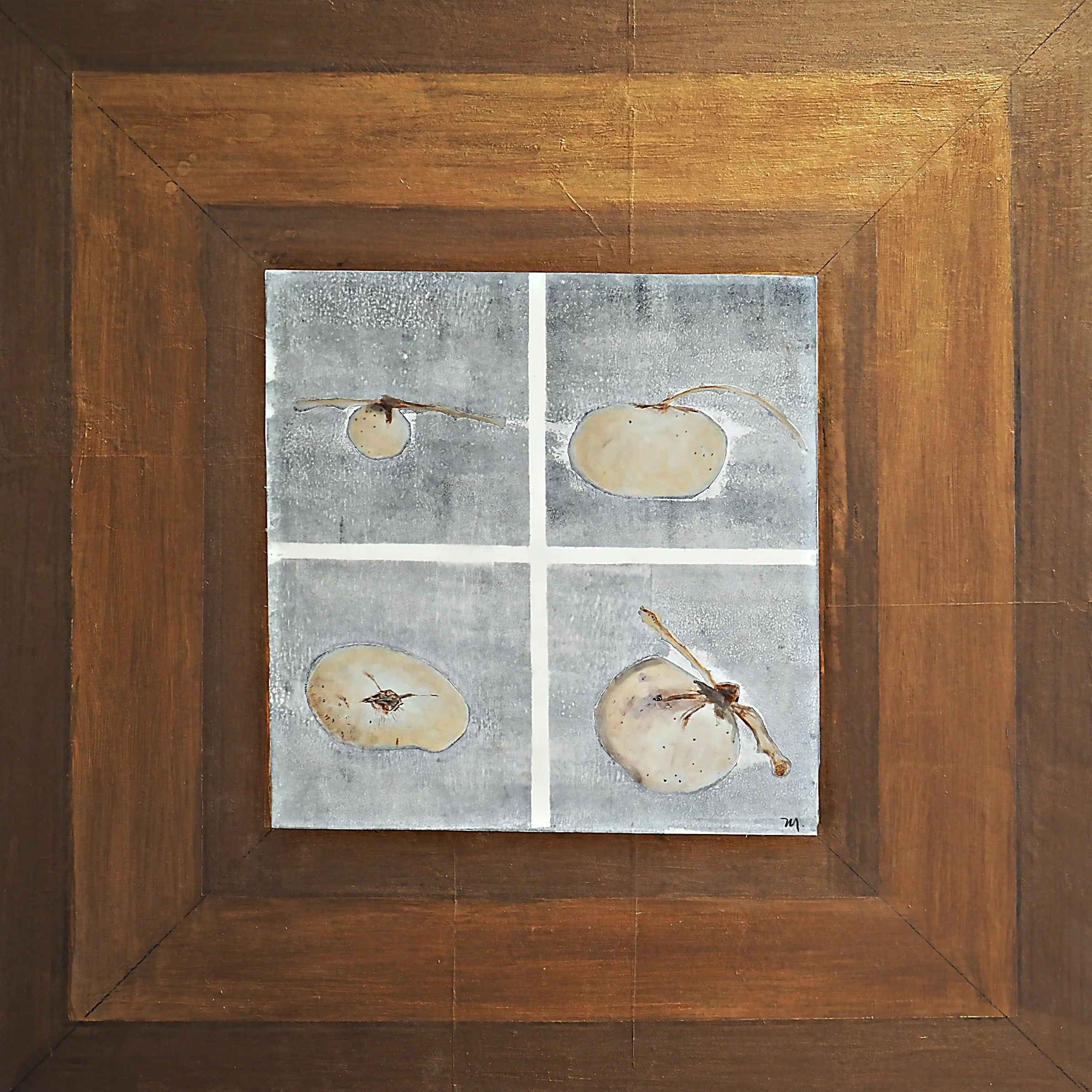
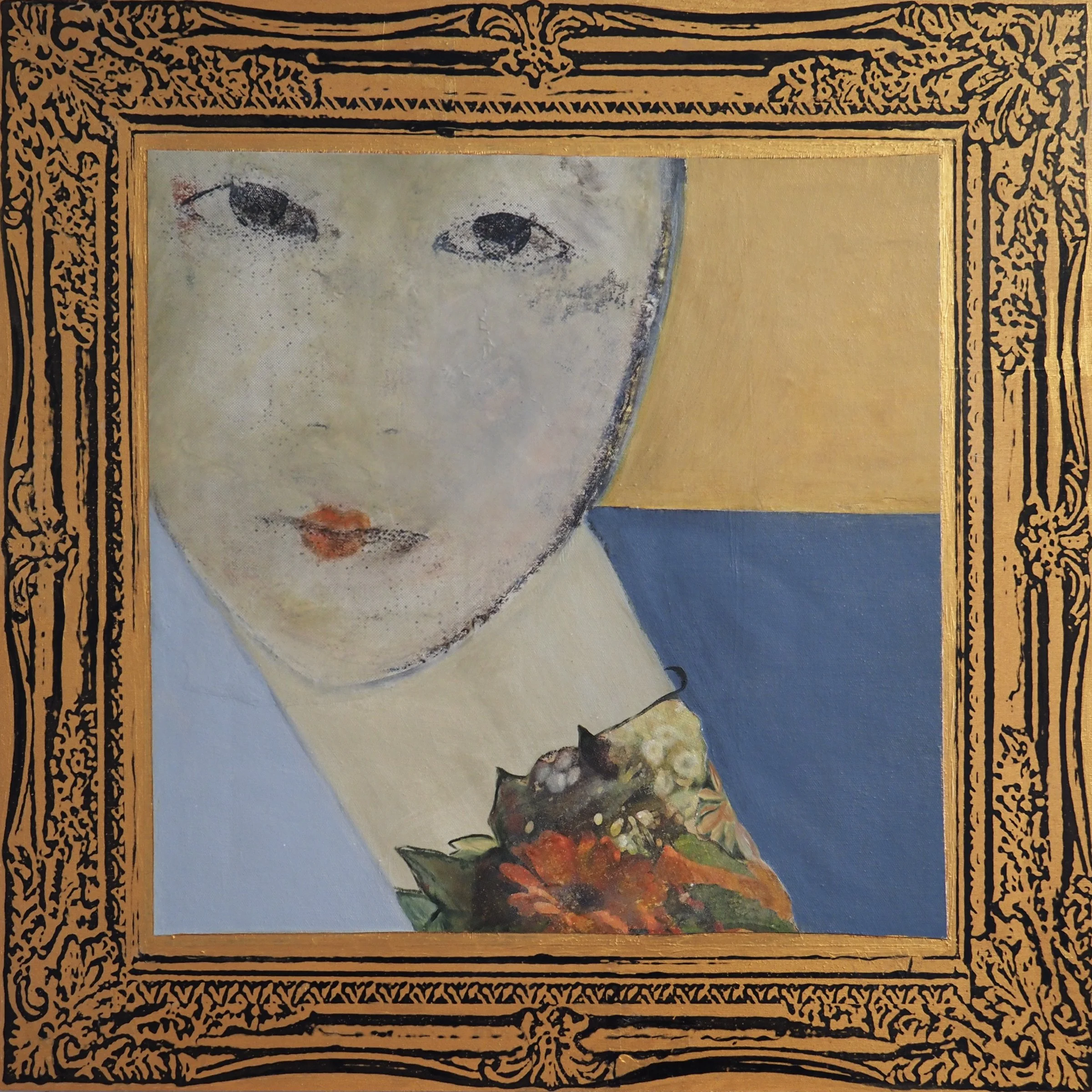
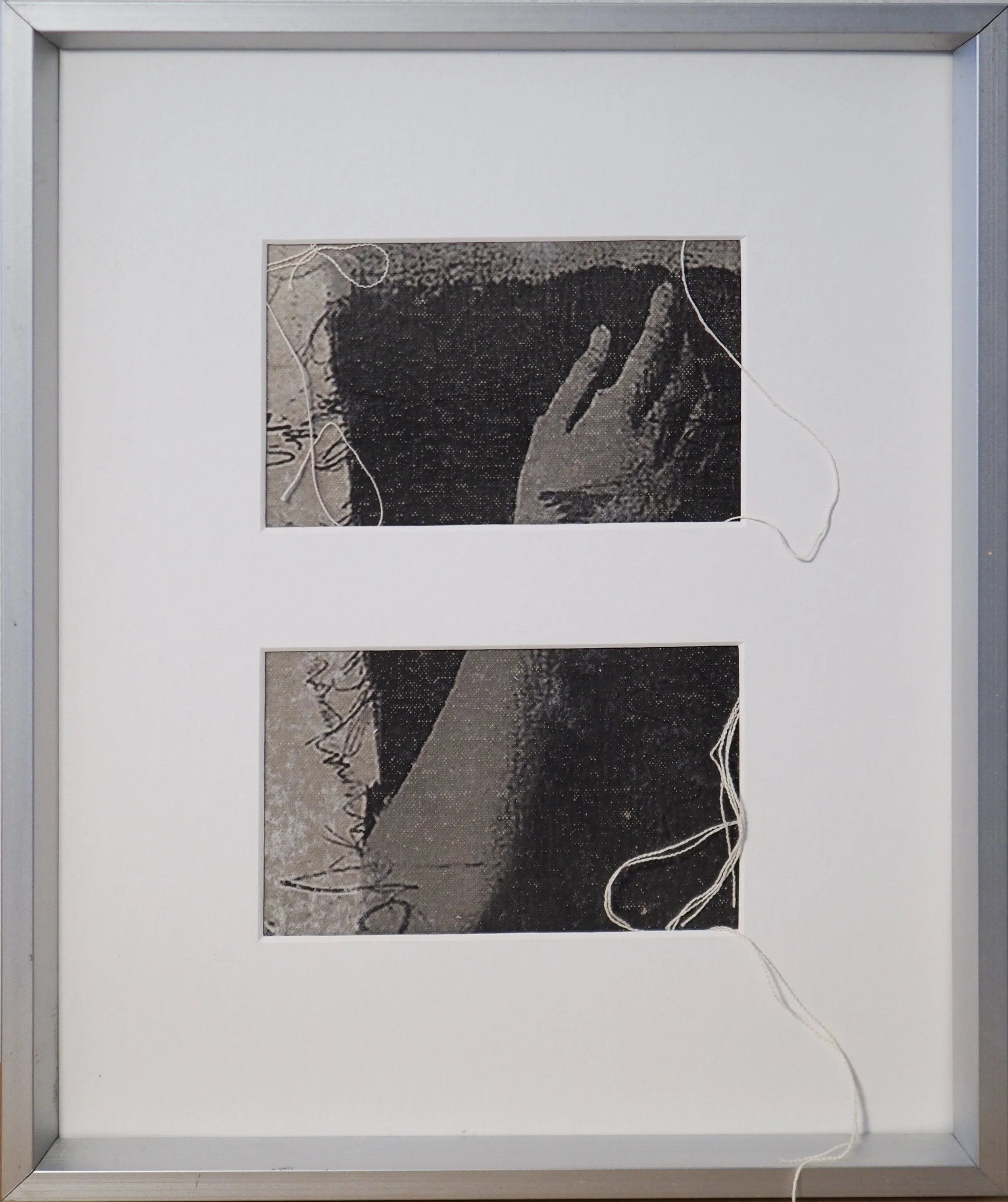
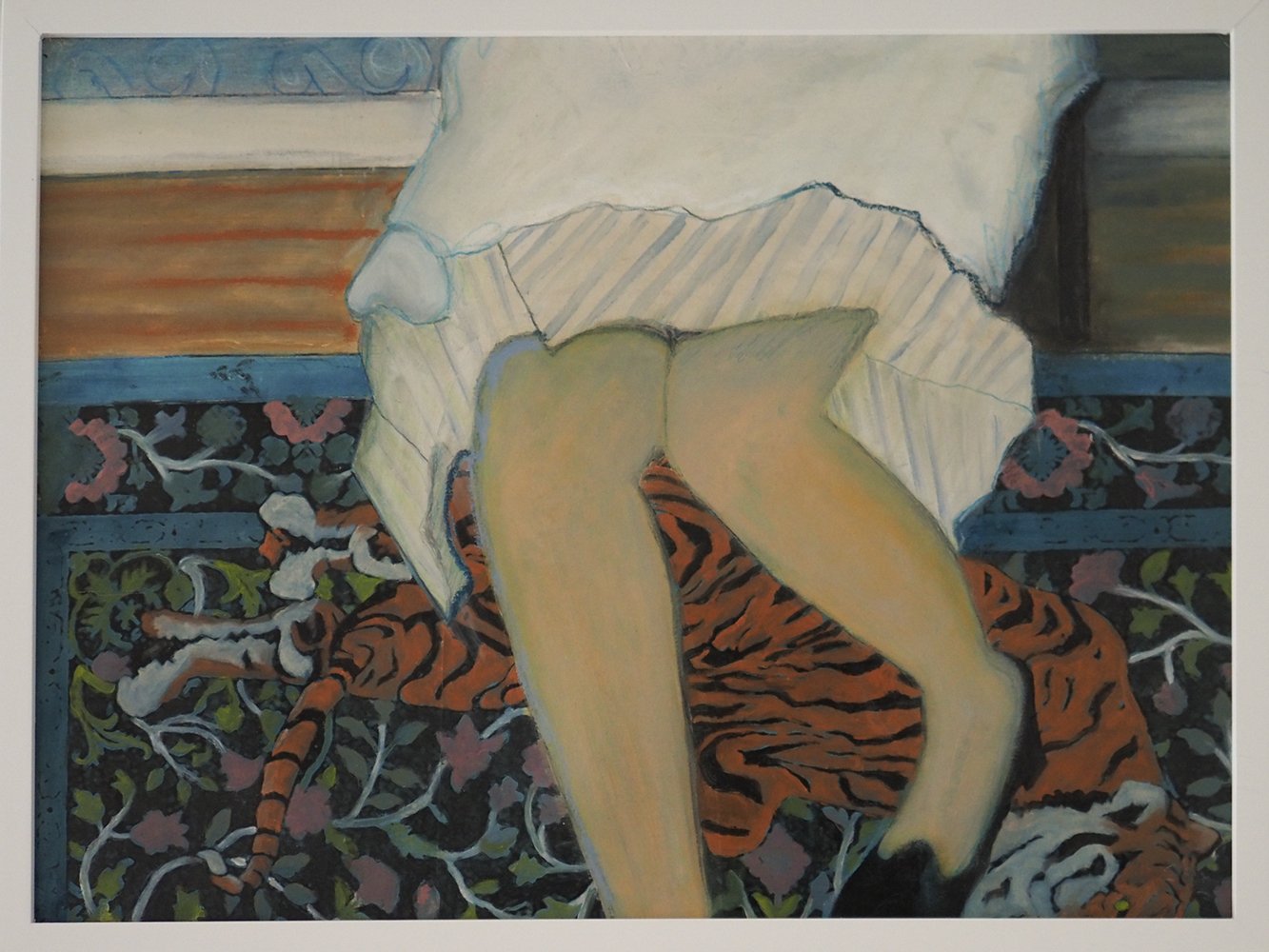
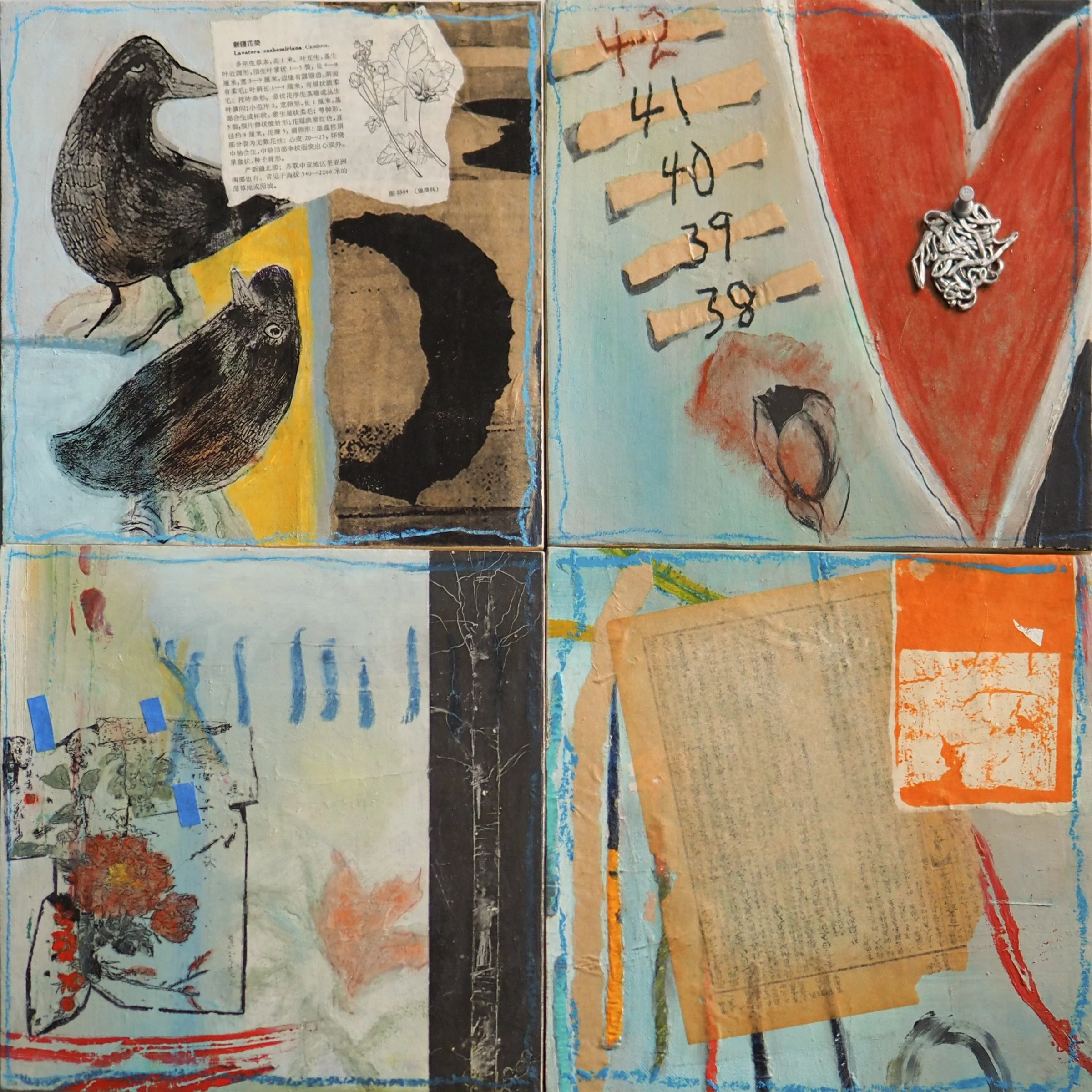
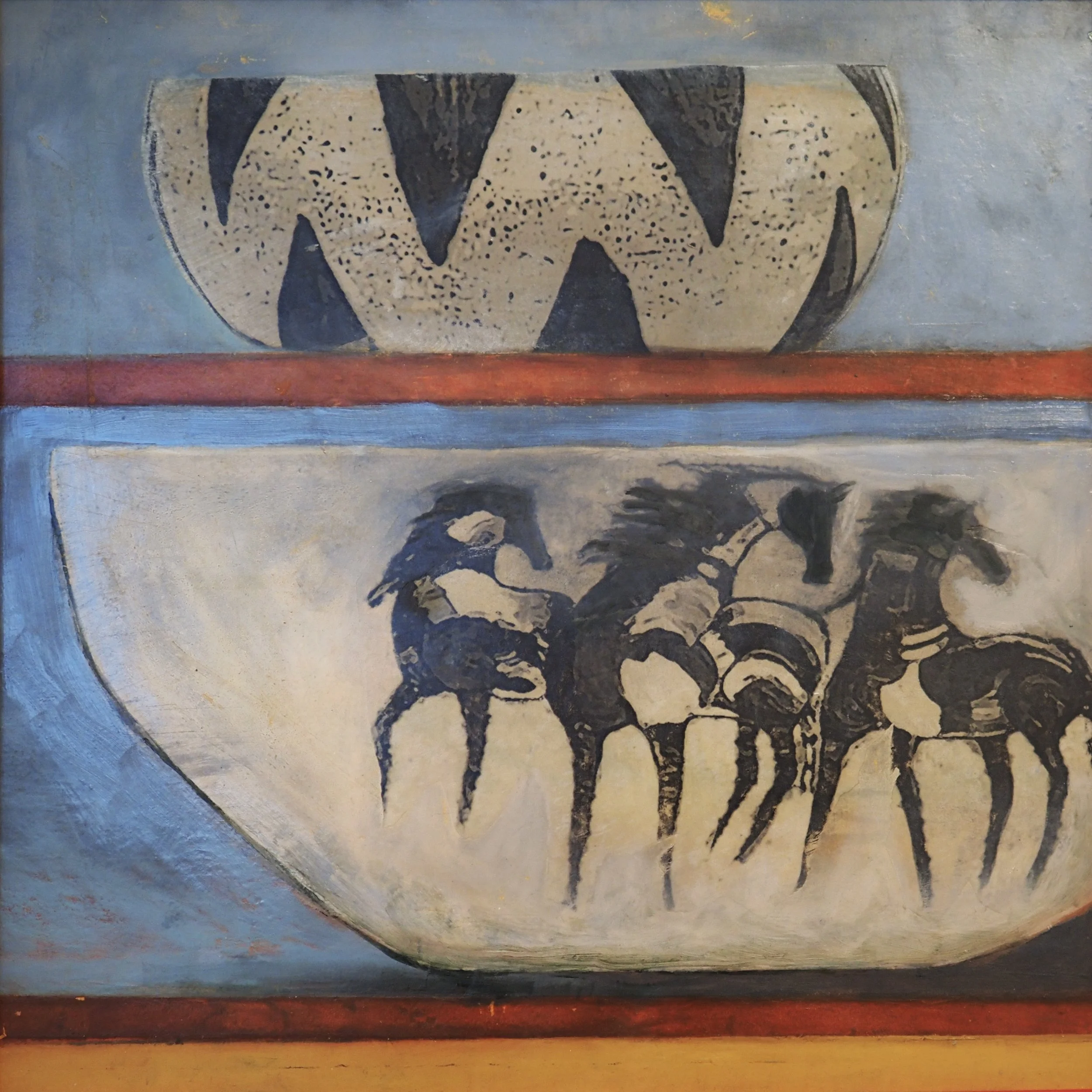
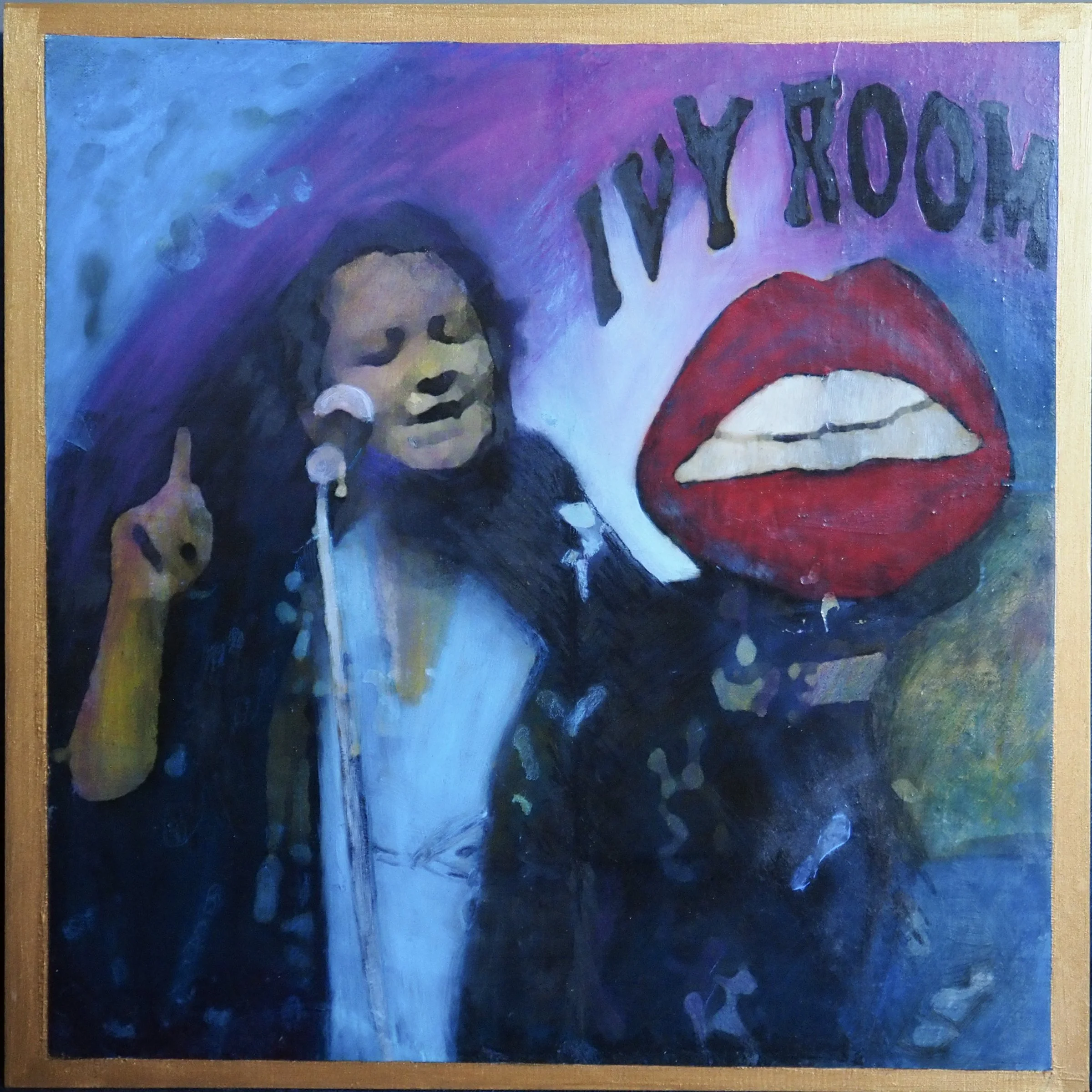
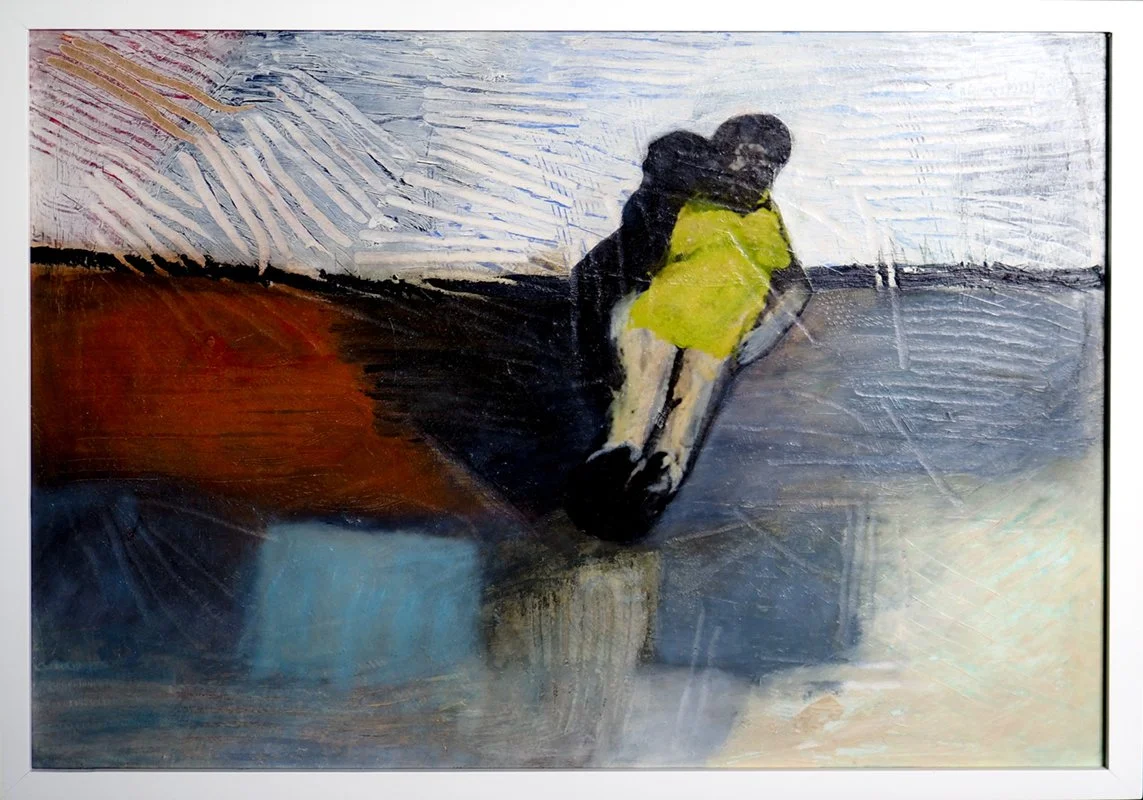
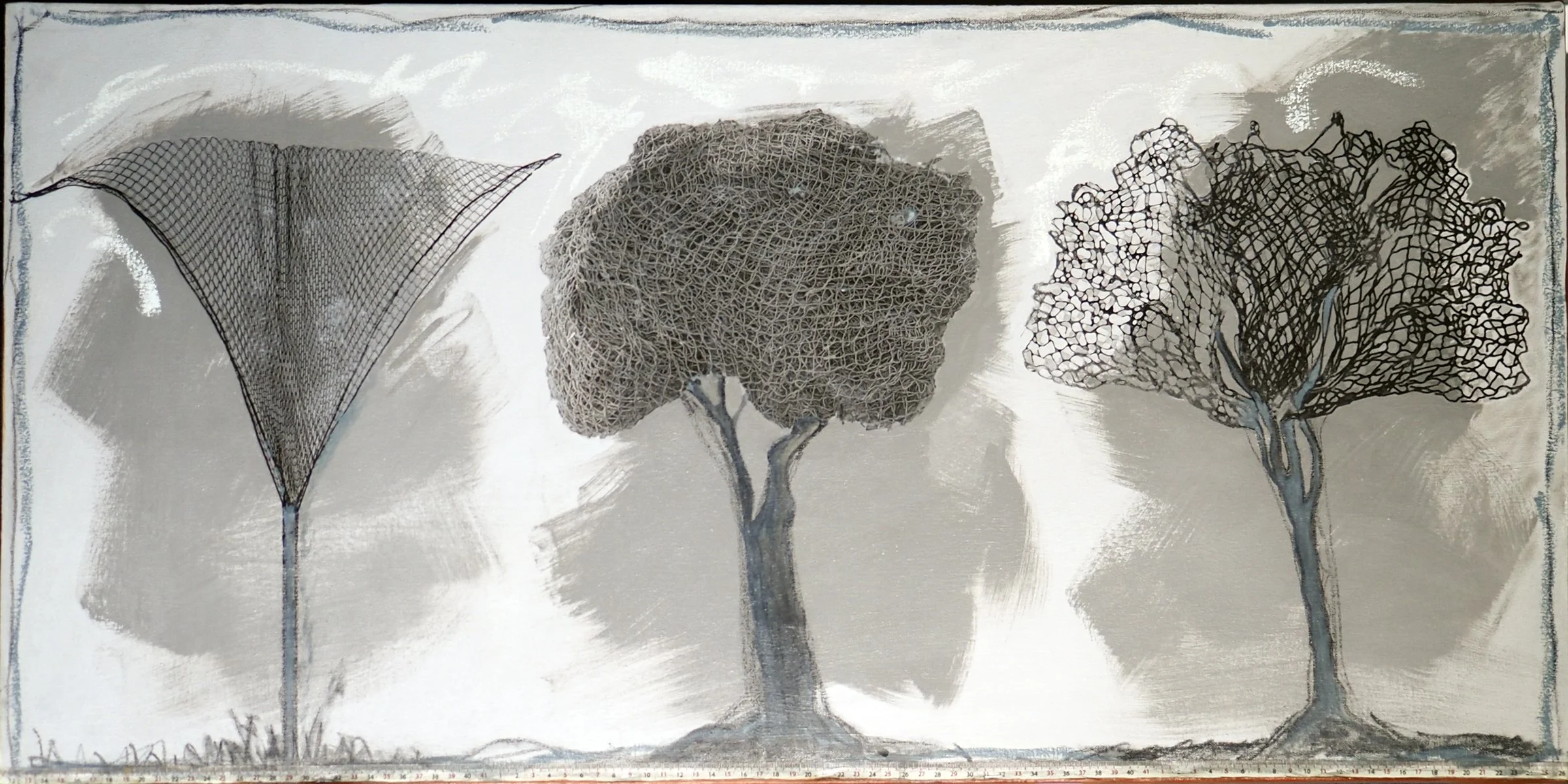
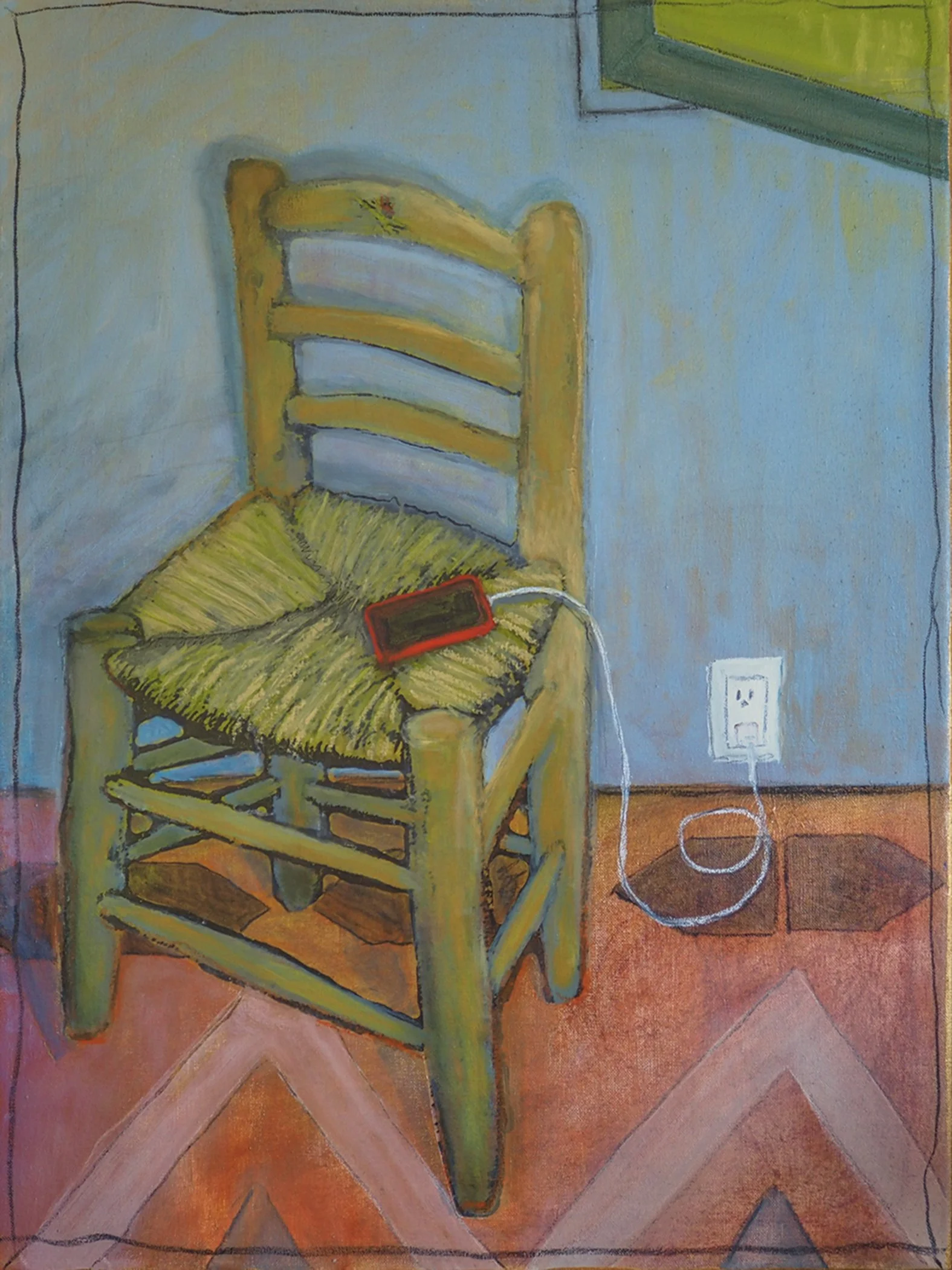
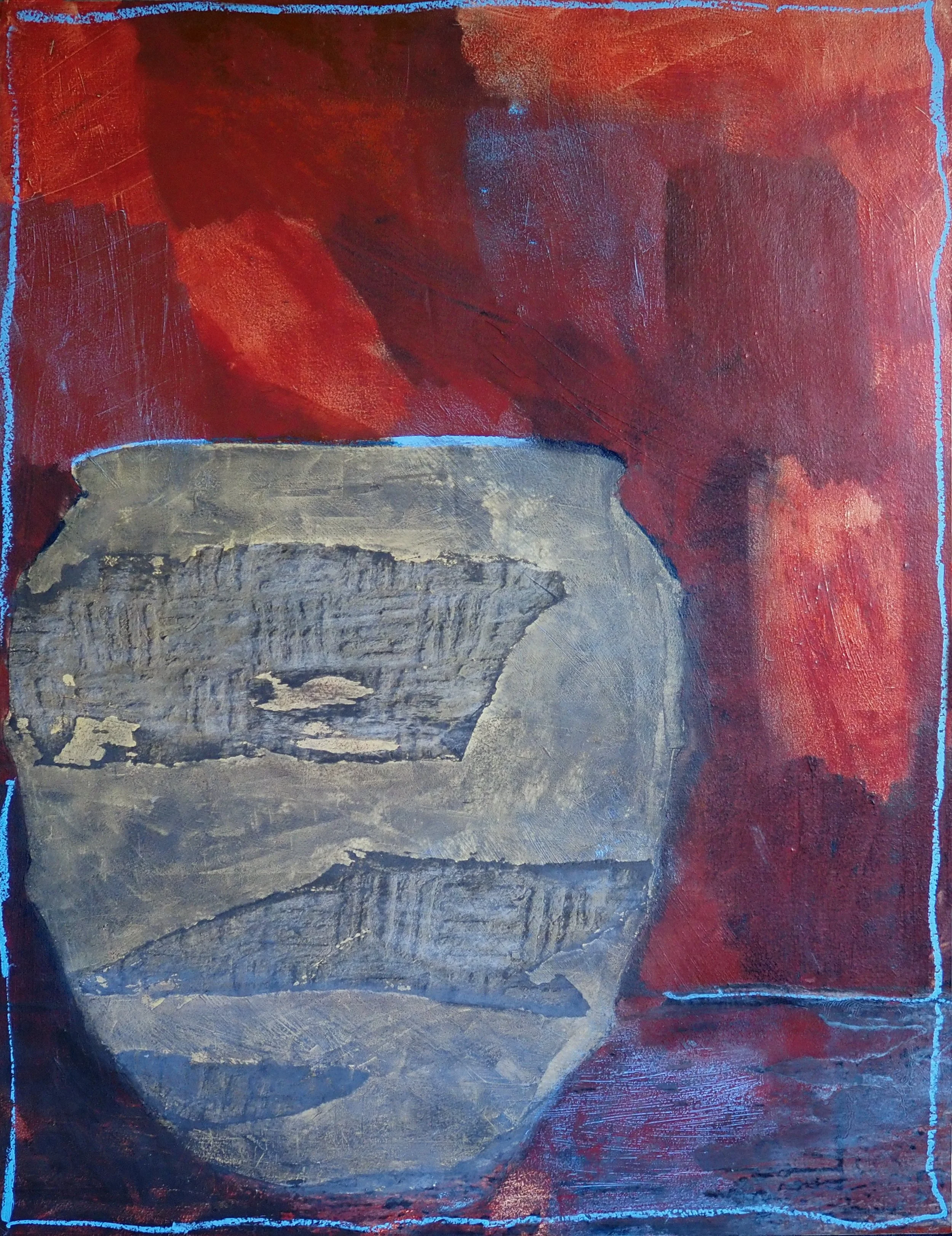
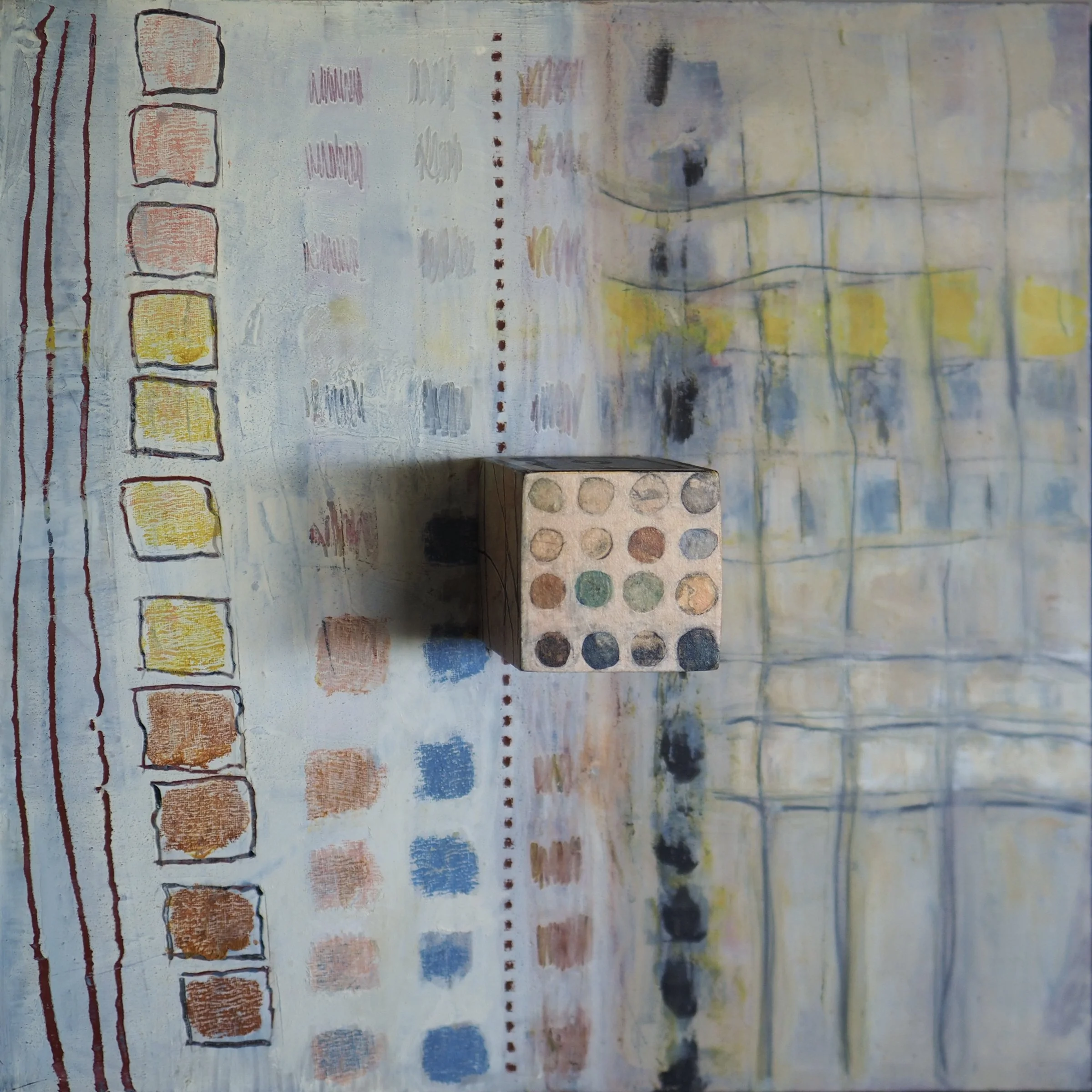
What follows is a catalog of most of the pieces in my show “Art Thief” (in no particular order). I hope my commentary above holds true and helpful for you.
(I have put asterisks by a few of the art pieces below. For those pieces, you may find, if you are interested, the material from which the photo transfers were made in the Sub-Gallery. You are left to your devices to seek out the others and the References that I suggest.)
SUB-GALLERY